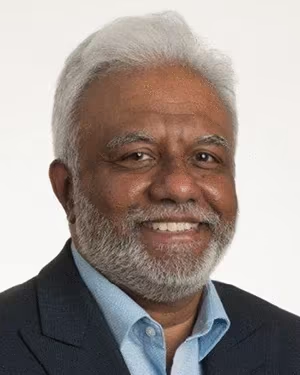
Prof. Saman Halgamuge
Professor
The University of Melbourne, Australia
Profile:
Prof. Saman Halgamuge, Fellow of IEEE and IET, received the B.Sc. Engineering degree in Electronics and Telecommunication from the University of Moratuwa, Sri Lanka, and the Dipl.-Ing. and Ph.D. degrees in Data Engineering from the Technical University of Darmstadt, Germany. He is currently a Professor in the Department of Mechanical Engineering, School of Electrical, Mechanical and Infrastructure Engineering, The University of Melbourne.
He is listed among the world's top 2% most-cited researchers in Artificial Intelligence and Image Processing in the Stanford University database. He served as an IEEE Computational Intelligence Society Distinguished Lecturer (2018–2021) and has successfully supervised 50 Ph.D. students and 16 postdoctoral researchers in Australia.
His research has been supported by the Australian Research Council (ARC), National Health and Medical Research Council (NHMRC), the U.S. Department of Defense Biomedical Research Program, and several international industry partners. His previous leadership roles include Head of the School of Engineering at the Australian National University and Associate Dean of the Faculty of Engineering and Information Technology at The University of Melbourne. His research and teaching interests include Algorithms, Artificial Intelligence, Machine Learning, Optimization, and Intelligent Systems.

Dr. Malka N. Halgamuge
Senior Lecturer in Cybersecurity
RMIT University, Melbourne, Australia
Profile:
Dr. Malka N. Halgamuge is a Senior Lecturer in Cybersecurity at RMIT University, Melbourne, Australia. She currently serves as Chair of the IEEE Computational Intelligence Society (Victorian Section), Vice Chair of the IEEE Victorian Section, Australia, and Geo-Diversity Co-Chair (Oceania) of N2Women. She is also an Adjunct Professor at Birla Institute of Technology and Science (BITS Pilani) and Vellore Institute of Technology (VIT), India.
She serves as an Associate Editor for IEEE Transactions on Consumer Electronics and Engineering Applications of Artificial Intelligence (Elsevier). She received her Ph.D. from the Department of Electrical and Electronic Engineering at The University of Melbourne.
Dr. Halgamuge has been the Chief Investigator on multiple research grants totaling more than AUD 2 million, funded by Australian Government agencies including DFAT, the Department of Defence, the Defence Science Institute (DSI), ATSE, and the Department of Industry.
Prior to joining RMIT, she was a Researcher at The University of Melbourne and later a Senior Lecturer in Cybersecurity at La Trobe University. She also managed the Australian Government's Cyber Security Skills Partnership Innovation Fund, leading collaborations with industry partners including Cisco, Optus, Wiley, GHD, Quantum Victoria, Practera, and War on Wasted Talent to strengthen Australia's cyber security workforce.
Her research interests include the Internet of Things (IoT), cybersecurity, artificial intelligence, data communications, large language models (LLMs), and energy-efficient intelligent systems. She has authored more than 120 peer-reviewed publications, 35 book chapters, and five books. Her work has received over 6,000 Google Scholar citations (h-index: 40), and according to SciVal, she ranked among RMIT University's leading researchers by Field-Weighted Citation Impact (2022–2026).
Dr. Abdulbasit A. Darem
Associate Professor
Center for Scientific Research and Entrepreneurship
Northern Border University, Saudi Arabia
Profile:
Dr. Abdulbasit A. Darem (World’s Top 2% Scientists 2025) is an Associate Professor of Cybersecurity and Artificial Intelligence at the Center for Scientific Research and Entrepreneurship, Northern Border University (NBU), Saudi Arabia.
He holds a Ph.D. in Computer Science from Mysore University, India, and has led numerous research initiatives in the fields of artificial intelligence, cybersecurity threats, ransomware detection, and privacy in social networks. He has served as the Principal Investigator (PI) for multiple funded research projects, with more than 81 research projects and total funding exceeding US$765,000.
Dr. Darem has published more than 130 articles in international peer-reviewed journals, including high-impact journals, and has presented several conference papers addressing critical cybersecurity challenges using Artificial Intelligence, including machine learning and deep learning techniques.
He holds one patent from Japan, with three additional patents currently under consideration. As the Chair of the Cybersecurity Research Group (RG-NBU-2022-1724) and the RDO-1385 project, Dr. Darem actively conducts innovative research and collaborates with international research teams to address emerging challenges in cybersecurity.
His research contributions have earned him recognition and multiple awards for academic excellence, highlighting his dedication to advancing cybersecurity knowledge and developing impactful solutions through research and innovation.
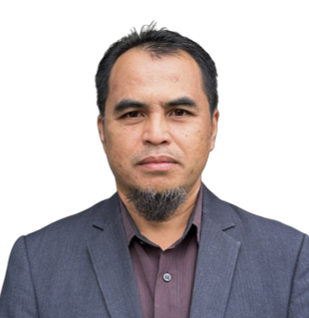
Assoc. Prof. Ir. Dr. Sohiful Anuar Zainol Murad
Associate Professor
Universiti Malaysia Perlis, Malaysia
Profile:
Assoc. Prof. Ir. Dr. Sohiful Anuar Zainol Murad is an Associate Professor at the Faculty of Electronic Engineering & Technology, Universiti Malaysia Perlis (UniMAP), Malaysia. He is a Professional Engineer registered with the Board of Engineers Malaysia and a Senior Member of IEEE.
He received his Ph.D. in Electronics from Kyushu University, Japan, his M.Sc. in Electronic System Design Engineering from Universiti Sains Malaysia, and his B.Eng. in Electronic Engineering from Saga University, Japan. Before joining academia, he worked as an R&D Engineer at Sharp-Roxy Corporation and a Quality Assurance Engineer at SGTi Sumitomo Globetronics.
His research interests include RF and analog integrated-circuit design, RF front-end circuits, VLSI design, energy harvesting, electronic systems, artificial intelligence, and the Internet of Things (IoT).
He has served as project leader and co-researcher for numerous national, international, industry, and community research projects with a combined value exceeding RM2.5 million. He has authored or co-authored more than 140 Scopus-indexed publications and ten academic books, and holds several Malaysian, UK, and US intellectual-property registrations.
His research and innovation work has received more than 60 awards and medals at national and international exhibitions. He has also served as a keynote and invited speaker, thesis examiner, external programme assessor, engineering accreditation evaluator, grant reviewer, journal and conference reviewer, and STEM programme leader.
His current work focuses on advanced CMOS circuits for 5G/6G, AI, IoT, energy-efficient electronic systems, and STEM education.
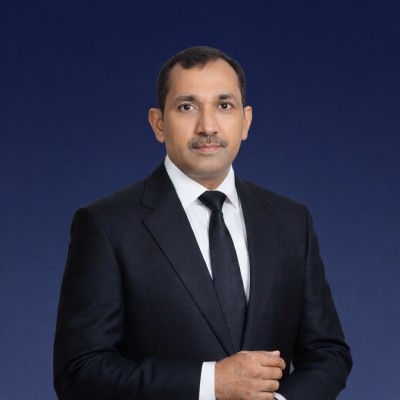
Mr. Praveen Kumar
Senior Engineering Manager
Intel Corporation
Profile:
Praveen Kumar is an accomplished alumnus of the University of Delhi, bringing over 25 years of diverse industry experience. After earning his M. Tech in Microwave Electronics from South Campus, University of Delhi, he embarked on his career as a scientist at ISRO. During his tenure at ISRO, he made significant contributions to spacecraft antenna design, including being one of the two designers of the world’s first planar antenna for geostationary spacecraft, successfully deployed on the Kalpana-1 satellite. He also played a pivotal role in developing ground station antenna systems and designing dielectric radiating elements for Cassegrain feeds at S and X bands.
In 2006, Praveen transitioned to the private sector, joining Kyocera, where he was the first antenna engineer in India, pioneering antenna design work for CDMA mobile handsets. Subsequently, he held key roles at Kavveri Telecom Products and Powerwave Technologies, contributing to the development of base station antennas, passive RF components, and various RF products for both commercial and defense applications.
Over the course of his career, Praveen has cultivated deep expertise across a broad spectrum of domains, including antenna systems, RF technologies, 5G modems, high-speed digital boards, and Artificial Intelligence. Currently, as a Senior Engineering Manager at Intel, he is leading transformative Platform & System Design initiatives that redefine the boundaries of technological innovation.
Recognized as a thought leader in his field, Praveen has authored more than 20 technical papers and holds five granted patents.